Beat Jet Lag in 2026: 4 Science-Backed Strategies for Faster Adaptation on Long-Haul Flights

Anúncios
Crossing multiple time zones no longer has to mean sacrificing the first few days of your trip to exhaustion and brain fog. Learning how to Beat Jet Lag using modern circadian science is the ultimate secret to hitting the ground running on any long-distance flight.
By leveraging strategic light exposure, timed meal scheduling, and targeted rest protocols, you can actively reset your internal clock before landing. These proven circadian adjustments prevent severe travel fatigue and align your body’s biological rhythms with your new destination in record time.
This guide breaks down four science-backed strategies to minimize recovery time on long-haul journeys. Say goodbye to daytime sluggishness and reclaim your energy from the moment you step off the plane.
The Evolving Challenge of Jet Lag in 2026
Jet lag continues to be a significant challenge for global travelers, impacting productivity, well-being, and the overall enjoyment of international trips.
As air travel expands and becomes more accessible, the demand for effective solutions intensifies, driving new research and technological advancements.
In 2026, understanding the physiological mechanisms behind circadian rhythm disruption is more critical than ever. Researchers are refining strategies that leverage our biological clocks, offering more personalized and precise interventions than ever before.
The focus has shifted from mere symptom management to proactive adaptation, allowing travelers to significantly reduce recovery times and maximize their experience abroad. These advancements are critical for business travelers and tourists alike.
Anúncios
Strategic Light Exposure for Circadian Rhythm Reset
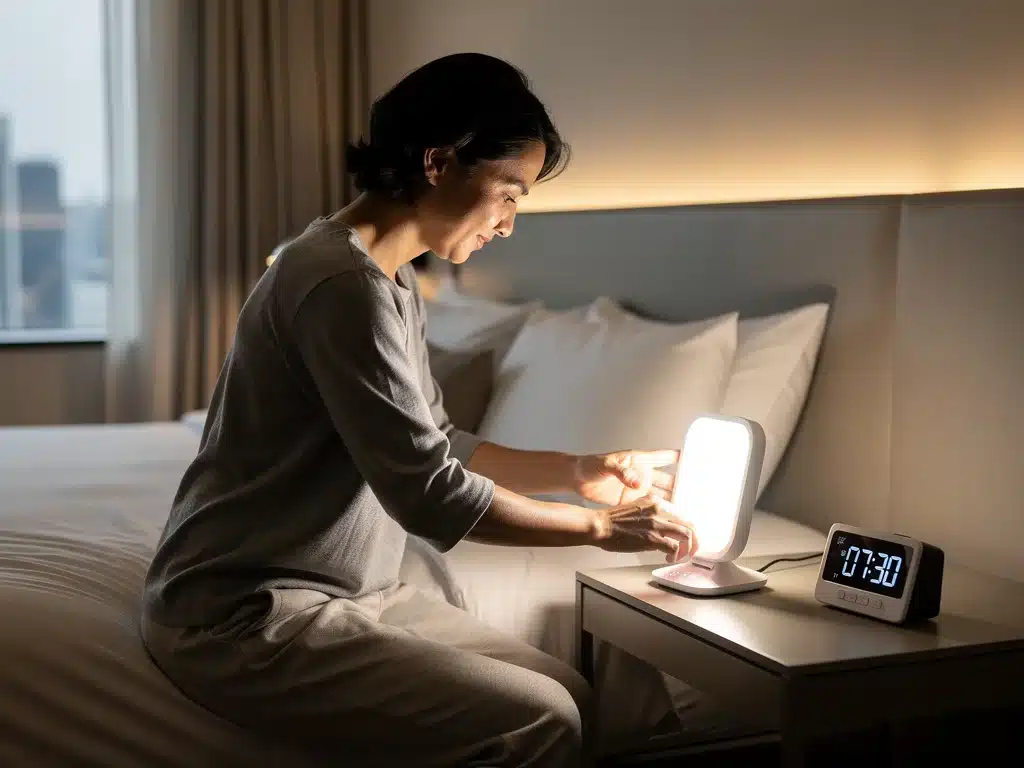
One of the most powerful tools to beat jet lag involves precisely timed light exposure. Light is the primary cue for our internal body clock, influencing hormone production like melatonin and regulating sleep-wake cycles.
In 2026, smart devices and personalized apps are making it easier to determine optimal light exposure schedules based on individual travel itineraries and chronotypes. This targeted approach helps travelers shift their circadian rhythm before, during, and after their journey.
Avoiding light at certain times and seeking it out at others can significantly accelerate the body’s adjustment to a new time zone. This method is backed by extensive scientific research and is becoming increasingly sophisticated.
Leveraging Smart Devices and Apps
New applications integrate real-time flight data with personal biometric information to recommend precise light exposure times. These tools can suggest when to seek bright light and when to don blue-light-blocking glasses, even offering in-flight guidance.
The rise of wearable tech also plays a crucial role, with devices that monitor sleep patterns and light intake, providing actionable insights. This data-driven approach empowers travelers to take control of their circadian rhythm adjustment.
- Utilize personalized light scheduling apps pre-flight.
- Invest in blue-light-blocking glasses for evening travel.
- Seek natural sunlight immediately upon arrival in the new time zone.
The goal is to gradually nudge the body’s internal clock towards the destination time zone, minimizing the shock of a sudden shift. This proactive strategy is far more effective than simply reacting to symptoms once they appear.
Anúncios
Optimizing Melatonin Supplementation
Melatonin, a hormone naturally produced by the pineal gland, signals to the body that it’s time to sleep. Strategic melatonin supplementation has long been a recognized method to beat jet lag, but 2026 brings refined guidelines for its use.
Dosage and timing are critical for melatonin to be effective without causing unwanted side effects. Emerging research helps travelers understand when to take melatonin and in what amounts, depending on the direction and duration of their travel.
The aim is to reinforce the body’s natural sleep signals at the appropriate time in the new time zone, helping to reset the circadian clock more quickly. This precise application is key to its efficacy.
Precision Dosing and Timing for Best Results
Current recommendations suggest lower doses of melatonin (0.5mg to 3mg) taken 30 minutes before the desired bedtime in the new time zone. Higher doses do not necessarily improve effectiveness and can lead to morning grogginess.
For eastward travel, melatonin can be particularly helpful in advancing the sleep phase. For westward travel, it’s generally less crucial, as delaying sleep is often easier for the body naturally.
- Consult a healthcare professional for personalized melatonin advice.
- Start with a low dose (0.5mg) and adjust as needed.
- Take melatonin at the target bedtime in the destination, not before.
New formulations, including extended-release options, are also being explored to mimic the body’s natural melatonin production more closely. This innovation aims to provide a more sustained and gentle sleep induction, further helping to beat jet lag.
The Role of Strategic Meal Timing
Beyond light and melatonin, recent studies in 2026 highlight the significant impact of strategic meal timing on circadian rhythm. Our eating patterns can influence peripheral body clocks in organs like the liver and gut, which in turn affect our central clock.
An “eat-sleep-eat” strategy, often referred to as the Argonne diet or similar protocols, involves fasting for a period before and during the flight, then eating at the destination’s breakfast time. This helps to reset metabolic clocks.
By synchronizing meal times with the destination’s schedule, travelers can provide another powerful cue to their body to adjust to the new time zone. This holistic approach complements light and melatonin strategies.
Implementing an “Eat-Sleep-Eat” Protocol
Typically, this involves fasting for 12-16 hours leading up to the first meal in the new time zone. This fasting period signals a metabolic reset, preparing the body for the new schedule.
Upon arrival, eating a protein-rich breakfast at the local breakfast time helps to solidify the new rhythm. Avoiding heavy meals and caffeine close to bedtime is also crucial.
- Fast for 12-16 hours before the first meal at destination.
- Eat a substantial breakfast at the destination’s morning time.
- Avoid caffeine and alcohol, especially during the fasting period.
This strategy can be particularly effective for long-haul flights crossing multiple time zones, as it provides a strong internal signal for the body to adapt. It is another powerful tool to beat jet lag effectively.
Strategic Napping and Hydration
While often overlooked, strategic napping and rigorous hydration are foundational elements in any comprehensive plan to beat jet lag. These practices help manage fatigue and support overall physiological adaptation.
Short, well-timed naps can alleviate acute sleep deprivation without disrupting the night’s sleep in the new time zone. The timing and duration of these naps are critical to their effectiveness.
Maintaining optimal hydration, especially in the dry cabin environment of an airplane, is essential for bodily functions and can mitigate some of the physical symptoms associated with jet lag. Dehydration exacerbates fatigue and mental fogginess.
Optimal Napping and Hydration Practices
Upon arrival, if fatigue is overwhelming, a power nap of 20-30 minutes can be beneficial, but avoid longer naps that could lead to deeper sleep stages and further disorientation. Timing these naps to avoid interfering with nighttime sleep is key.
Drinking plenty of water before, during, and after the flight is paramount. Avoid excessive alcohol and caffeinated beverages, which can contribute to dehydration and disrupt sleep patterns.
- Limit naps to 20-30 minutes upon arrival to combat initial fatigue.
- Prioritize water intake throughout the entire travel process.
- Avoid alcohol and excessive caffeine, especially in-flight.
These practices, while seemingly simple, provide crucial support for the body’s complex process of adjusting to a new time zone. They are vital components when trying to beat jet lag and ensure a smoother transition.

Preparing for Long-Haul Travel in 2026
Effective preparation is the cornerstone of successfully managing and beating jet lag in 2026. Proactive planning can significantly reduce the severity of symptoms and accelerate adaptation upon arrival, making the travel experience far more enjoyable.
This preparation extends beyond just packing; it involves gradually shifting sleep schedules, understanding the destination’s time zone, and implementing pre-flight strategies. The more prepared a traveler is, the less severe the impact of time zone changes.
Adopting a holistic approach that integrates various strategies before even boarding the plane sets the stage for a smoother transition. This foresight is what distinguishes a well-managed trip from one plagued by fatigue.
Pre-Flight Adjustments and Planning
Begin adjusting your sleep schedule by an hour or two each day in the direction of your destination’s time zone, starting several days before departure. This gradual shift makes the eventual change less abrupt for your body.
Familiarize yourself with the destination’s sunrise and sunset times to plan your initial light exposure. Packing essential items like an eye mask, earplugs, and a refillable water bottle can also make a significant difference in-flight.
- Gradually shift sleep schedule days before departure.
- Research destination’s light-dark cycle for planning.
- Pack travel essentials like eye masks and noise-canceling headphones.
These preparatory steps are not just about comfort; they are about actively engaging with your body’s natural rhythms to minimize disruption. A well-prepared traveler is already halfway to successfully beating jet lag.
Emerging Technologies and Future Solutions
The landscape of jet lag mitigation is continually evolving, with 2026 seeing significant advancements in technology and scientific understanding. Researchers are exploring innovative solutions that promise even more effective ways to beat jet lag in the coming years.
From personalized genetic analyses that predict jet lag susceptibility to advanced wearable devices offering real-time circadian rhythm management, the future holds exciting possibilities. These developments aim to make long-haul travel virtually jet lag-free.
The integration of AI and machine learning into travel planning apps will offer hyper-personalized advice, adapting strategies based on individual responses and environmental factors. This level of customization is unprecedented.
AI-Powered Circadian Rhythm Management
AI algorithms are being developed to analyze a traveler’s biometric data, travel history, and destination specifics to generate highly individualized jet lag prevention plans. These plans can dynamically adjust based on real-time feedback from the user.
Imagine an app that not only tells you when to sleep and eat but also adjusts your smart home lighting to prepare your body days before your trip. This seamless integration will revolutionize how we approach long-haul travel.
- Expect AI-driven personalized jet lag plans.
- Wearables will offer real-time circadian rhythm feedback.
- Future solutions may include genetic predisposition analysis.
These emerging technologies represent the next frontier in the battle against jet lag, offering a glimpse into a future where the challenges of time zone changes are largely overcome. The ability to beat jet lag will become increasingly sophisticated and accessible.
The Science Behind Circadian Rhythms
Understanding the fundamental science of circadian rhythms is paramount to effectively combatting jet lag.
Our internal 24-hour clock, primarily governed by the suprachiasmatic nucleus (SCN) in the brain, orchestrates nearly all bodily functions, from sleep-wake cycles to hormone release and metabolism.
When we cross multiple time zones rapidly, our internal clock remains aligned with the departure location, creating a desynchronization with the new environment. This mismatch is the core physiological basis of jet lag symptoms, including fatigue, irritability, and digestive issues.
By leveraging external cues, known as zeitgebers—such as light, food, and social interaction—we can actively influence and reset our SCN. This scientific understanding forms the foundation of all effective strategies to beat jet lag.
Key Hormones and Their Role
Melatonin, the hormone of darkness, plays a crucial role in signaling sleep to the body. Its production is suppressed by light and stimulated by darkness, making light exposure a powerful tool for rhythm adjustment.
Cortisol, often associated with stress, also follows a circadian rhythm, peaking in the morning to promote wakefulness. Disruptions to this cycle contribute significantly to the feeling of disorientation experienced with jet lag.
- The SCN is the master clock regulating circadian rhythms.
- Light is the most potent zeitgeber for resetting the SCN.
- Melatonin and cortisol cycles are key to sleep-wake regulation.
A deeper appreciation of these intricate biological processes allows travelers to apply strategies that work in harmony with their body’s natural mechanisms. This scientific literacy is vital for anyone looking to truly beat jet lag.
| Strategy | Benefit |
|---|---|
| Light Exposure | Resets circadian clock, influences sleep-wake cycles. |
| Melatonin Use | Reinforces sleep signals, aids sleep onset in new time zone. |
| Meal Timing | Synchronizes metabolic clocks, assists overall body adjustment. |
| Naps & Hydration | Manages fatigue, supports physiological function during adaptation. |
Frequently Asked Questions About Jet Lag
The most effective strategy combines strategic light exposure with precise melatonin supplementation. These two methods directly target the body’s circadian rhythm, providing strong cues to adjust to a new time zone more rapidly and efficiently. Consistency is key for optimal results.
Strategic meal timing, particularly an “eat-sleep-eat” protocol, helps reset the body’s peripheral metabolic clocks. By fasting and then eating at the destination’s breakfast time, you provide a powerful signal to your internal system to synchronize with the new schedule, reducing jet lag symptoms.
Yes, in 2026, technology plays a crucial role. Smart apps and wearable devices can provide personalized light exposure schedules, melatonin timing recommendations, and even track sleep patterns to optimize adaptation. AI-powered tools are emerging to offer even more tailored jet lag prevention plans.
Strategic napping can be beneficial, but only for short durations (20-30 minutes) to alleviate acute fatigue without entering deep sleep. Longer naps can worsen disorientation and interfere with nighttime sleep. Prioritizing consistent nighttime sleep in the new time zone is generally more effective.
Hydration is extremely important. Dehydration, common during air travel, exacerbates fatigue, headaches, and other jet lag symptoms. Drinking plenty of water and avoiding excessive alcohol and caffeine before, during, and after your flight can significantly mitigate these effects and aid recovery.
Looking Ahead
The advancements in understanding and combating jet lag in 2026 offer promising prospects for a more comfortable and productive travel experience. The integration of science-backed strategies with emerging technologies will continue to refine how travelers manage time zone shifts.
As research progresses, we anticipate even more personalized and effective solutions to become available, making the challenges of long-haul flights a thing of the past. Travelers should stay informed on these developments to continually optimize their adaptation strategies.
Monitoring official health guidelines and scientific publications will be crucial for adopting the most current and validated methods to beat jet lag effectively. This continuous evolution promises to transform global travel.