Clear Flight Cookies: Beat Dynamic Pricing on US Carriers
Anúncios
Have you ever noticed airline ticket prices creeping higher after you search for the same route twice? Knowing when to Clear Flight Cookies before booking can be the secret weapon that prevents major domestic airlines from tracking your shopping intent and raising fares.
Air carriers use sophisticated dynamic pricing algorithms that leverage your digital footprint and browsing history to gauge demand. When booking engines detect repeated visits to specific flight itineraries, automated yield management systems often trigger subtle price hikes to create artificial urgency.
By purging stored site tracking data and combining private browsing sessions with location masking, travelers can bypass algorithm-driven fare surges. Here is how to shield your search habits, avoid hidden price spikes, and lock in the lowest possible airfare across major US airlines.
Understanding Dynamic Pricing in Air Travel
Dynamic pricing is a revenue management strategy where businesses set flexible prices for products or services based on current market demands. In the airline industry, this means ticket prices can change by the minute, influenced by numerous factors beyond just supply and demand.
Airlines utilize complex algorithms that analyze a vast array of data points to determine the optimal price for a given seat at any moment. This data includes historical booking patterns, competitor pricing, time of year, day of the week, and even the user's browsing behavior.
Anúncios
The goal is to maximize revenue by charging each customer the highest price they are willing to pay. This strategy can lead to significant price variations for the exact same flight, creating challenges for travelers seeking the best deals.
How Airline Algorithms Track You
Airline websites and online travel agencies (OTAs) deploy various tracking technologies, primarily cookies, to monitor user activity. These small data files store information about your browsing habits, including the routes you search, the dates you consider, and how many times you've visited a specific flight.
When you repeatedly search for the same flight, the algorithm may interpret this as high interest or urgency. This perceived demand can trigger an increase in the displayed price, as the system identifies you as a more committed buyer, less likely to abandon the purchase due to a slight price hike.
This tracking extends beyond just the airline's website; third-party cookies from advertising networks can also contribute to a comprehensive profile of your online behavior. This collective data helps airlines and OTAs to present personalized, often higher, prices.
The Role of Cookies in Price Fluctuations
Tracking Interest: Cookies record your search history, indicating routes and dates of high interest.
Demand Signaling: Repeated searches for the same flight can signal increased demand, prompting price adjustments.
Personalized Pricing: Your browsing data contributes to a profile that can influence the prices you are shown.
The 15% Dynamic Pricing Discrepancy Across U.S. Carriers
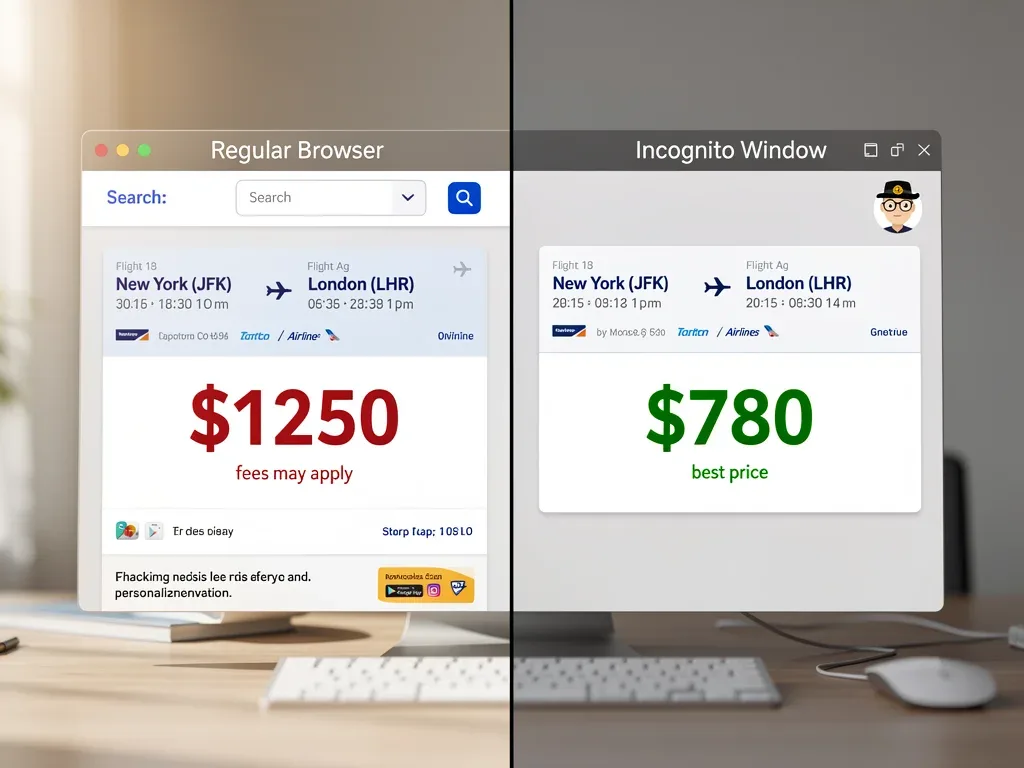
Recent studies and anecdotal evidence suggest a notable pricing discrepancy, sometimes reaching up to 15%, for the same flights when searched under different conditions. This phenomenon is particularly prevalent among major U.S. carriers, impacting a significant portion of domestic and international routes.
This 15% difference can translate into substantial savings or additional costs for travelers, depending on their awareness and browsing habits. For a $500 ticket, a 15% discrepancy means a potential $75 difference, which adds up quickly for families or frequent flyers.
The variations are not always consistent, but the trend indicates that users who do not clear their flight cookies or use Incognito mode are more likely to encounter higher prices. This highlights the importance of strategic browsing to mitigate these dynamic pricing effects.
Anúncios
Case Studies and Observed Trends
Numerous independent tests conducted by travel bloggers and consumer advocates have documented these price variations. Researchers often compare prices for identical flights searched simultaneously on different devices, in Incognito mode versus standard browsing, and with and without cleared cookies.
These tests consistently show that airlines and OTAs can present different prices to different users, even within minutes of each other. The variations are not random; they often correlate with the perceived browsing intensity and history of the user.
While airlines maintain that their pricing is based on supply and demand, the evidence strongly suggests that individual user data plays a significant role in determining the final price offered. This makes understanding Why You Must Clear Flight Cookies in Incognito Mode an essential travel hack.
Why Incognito Mode is Your Best Ally
Incognito mode, or private browsing, offers a simple yet effective solution to counter airline tracking and dynamic pricing. When you open an Incognito window, your browser does not store cookies, site data, or information entered in forms.
This means that each time you open a new Incognito window, you are essentially starting a fresh browsing session from the perspective of the airline's website. The site cannot access your previous search history or identify you as a returning visitor, thus preventing price inflation based on perceived interest.
Using Incognito mode regularly for flight searches can help you see the most objective prices available at that moment, free from the influence of your past browsing behavior. It's a crucial step in ensuring you're not unknowingly paying a premium.
How Incognito Mode Works Against Tracking
No Cookie Storage: Incognito mode prevents websites from storing new cookies on your device.
Session Isolation: Each Incognito session is isolated, meaning previous searches don't influence current prices.
Reduced Personalization: Airlines cannot tailor prices based on your past browsing habits when in Incognito.
Beyond Incognito: Other Strategies to Beat Dynamic Pricing
While Incognito mode is a powerful tool, it's part of a broader strategy to secure the best flight deals. Combining Incognito browsing with other smart travel hacks can maximize your savings and ensure you're always getting the most competitive prices available.
These strategies include being flexible with your travel dates, considering alternative airports, and utilizing price comparison websites effectively. A multi-pronged approach offers the best defense against the ever-changing landscape of airline pricing.
Staying informed about industry trends and understanding peak travel times also contributes to a more informed booking process. The more knowledge you have, the better equipped you are to make financially savvy travel decisions.
Clearing Browser Cookies Manually
If you prefer not to use Incognito mode, regularly clearing your browser's cookies and cache can achieve a similar effect. This removes stored data that airlines might use to track your interest and adjust prices.
The process for clearing cookies varies slightly depending on your browser (Chrome, Firefox, Safari, Edge), but it typically involves going into your browser settings, finding the privacy or history section, and selecting the option to clear browsing data, specifically cookies and cached images/files.
Make sure to clear cookies before each new flight search session, especially if you've been researching the same route multiple times. This ensures a clean slate, mimicking the anonymity provided by Incognito mode.
Using a VPN for Location-Based Pricing
Some airlines implement location-based pricing, where fares might vary depending on the country or region from which you are browsing. A Virtual Private Network (VPN) can mask your actual IP address and make it appear as though you are browsing from a different location.
While less common for U.S. domestic flights, this strategy can be particularly effective for international travel. Experimenting with different server locations on your VPN can sometimes reveal lower prices for the same flight.
It's important to note that not all VPNs are equally effective, and some airline websites might detect and block VPN usage. However, for those looking for every possible edge, a VPN can be another tool in their arsenal against dynamic pricing.
The Impact on U.S. Carriers and Consumer Behavior
The widespread adoption of dynamic pricing by U.S. carriers has significantly altered consumer behavior in the travel planning process. Travelers are becoming more savvy, actively seeking ways to circumvent these pricing strategies, including learning Why You Must Clear Flight Cookies in Incognito Mode: Testing the 15% Dynamic Pricing Discrepancy Across U.S. Carriers.
This shift in consumer behavior is driven by the desire for fairness and transparency in pricing. When travelers feel they are being unfairly targeted with higher prices, they are more likely to invest time in finding workarounds, impacting airline loyalty and booking patterns.
Airlines, in turn, continuously refine their algorithms to stay ahead of these consumer tactics. This creates an ongoing cat-and-mouse game between travelers and carriers, where information and strategic action are key for the consumer.
Airline Responses and Future Trends
Airlines generally defend dynamic pricing as a necessary tool for managing inventory and maximizing profitability in a highly competitive market. They argue that it allows them to offer a wider range of prices, catering to different segments of travelers.
However, as consumers become more aware of the mechanisms behind these price fluctuations, there is growing pressure for greater transparency. Regulatory bodies may also eventually step in to address concerns about potential discriminatory pricing practices.
The future of airline pricing may involve even more sophisticated AI-driven algorithms, but also potentially more robust tools for consumers to navigate these complexities. Staying informed will remain paramount for securing the best deals.
Step-by-Step Guide to Clearing Flight Cookies and Using Incognito Mode
Implementing these strategies is straightforward and can be done in just a few clicks. This guide provides clear instructions for both clearing cookies and utilizing Incognito mode across popular web browsers, ensuring you can immediately apply these tips to your next flight search.
Consistency is key; make it a habit to use Incognito mode or clear your cookies before every new flight search session. This simple routine can yield significant savings over time and prevent you from falling victim to inflated prices.
Empower yourself with these practical steps to take control of your flight booking experience. Knowing Why You Must Clear Flight Cookies in Incognito Mode is one thing; actively using that knowledge is another.
Clearing Cookies in Google Chrome
Open Chrome: Click the three-dot menu in the top right corner.
Settings: Select 'Settings' from the dropdown menu.
Privacy and security: Go to 'Privacy and security' and then 'Clear browsing data'.
Select options: Choose 'Cookies and other site data' and 'Cached images and files', then click 'Clear data'.
Using Incognito Mode in Firefox
Open Firefox: Click the menu button (three horizontal lines) in the top right.
New Private Window: Select 'New Private Window' from the menu.
Start Searching: A new private browsing window will open; begin your flight search here.
Maximizing Savings: Combining Strategies for Cheaper Flights
To truly maximize your savings, integrate Incognito mode and cookie clearing with other well-known travel hacks. This holistic approach creates a robust defense against dynamic pricing and increases your chances of finding genuinely low fares.
Consider the timing of your booking, as prices often fluctuate based on the day of the week or how far in advance you book. Mid-week bookings, for instance, are often cheaper than weekend bookings.
Also, don't overlook the power of price comparison websites, but remember to use them in Incognito mode too. These sites aggregate data from various airlines and OTAs, giving you a broader view of the market.
Best Practices for Flight Search
Always start your flight search in a fresh Incognito window to avoid being tracked. If you need to switch between different search engines or airlines, close the current Incognito window and open a new one for each new session.
Be flexible with your travel dates and times whenever possible. Flying on Tuesdays, Wednesdays, or Saturdays often results in lower fares than peak travel days like Fridays and Sundays. Early morning or late-night flights also tend to be cheaper.
Consider flying into or out of alternative airports if they are conveniently located. Sometimes, a slightly longer drive to a different airport can lead to significant savings on the flight itself. Every small saving contributes to a larger overall reduction in travel costs.
The Ethical Debate: Transparency vs. Profitability
The practice of dynamic pricing, particularly when it leverages personal browsing data, raises ethical questions about transparency and consumer fairness. While airlines aim for profitability, consumers seek fair and equitable access to pricing information.
The debate centers on whether airlines have an obligation to disclose how their pricing algorithms work and why prices might differ for individual users. Currently, such transparency is largely absent, leaving travelers to discover these discrepancies through their own efforts.
As technology advances, this ethical discussion is likely to intensify, potentially leading to calls for greater regulation or industry-wide standards. For now, understanding Why You Must Clear Flight Cookies in Incognito Mode remains the consumer's best defense.
Key Strategy | Benefit for Travelers |
|---|---|
Use Incognito Mode | Prevents cookie tracking, shows objective prices. |
Clear Browser Cookies | Removes browsing history used for dynamic pricing. |
Be Flexible with Dates | Lower fares often available on off-peak days. |
Consider Alternative Airports | Access cheaper flights from less crowded hubs. |
Frequently Asked Questions About Flight Pricing
Why do flight prices change so frequently?▼
Flight prices change due to dynamic pricing algorithms that respond to demand, availability, time of booking, and even user browsing history. Airlines adjust fares constantly to maximize revenue, often leading to rapid fluctuations within hours or even minutes.
What is a 15% dynamic pricing discrepancy?▼
A 15% dynamic pricing discrepancy refers to observed instances where the same flight can be up to 15% more expensive for a user who has repeatedly searched for it compared to a user browsing anonymously. This is often linked to cookie tracking.
Does Incognito mode really help save money on flights?▼
Yes, Incognito mode can help save money on flights by preventing airlines and OTAs from tracking your browsing history via cookies. This ensures you see unbiased prices, free from the influence of perceived demand or prior searches.
Should I clear my browser cookies before every flight search?▼
It is highly recommended to clear your browser cookies or use Incognito mode before every new flight search session. This resets your browsing footprint, ensuring you are presented with the most current and objective pricing available.
Are U.S. carriers the only ones using dynamic pricing?▼
No, dynamic pricing is a widespread strategy across the global airline industry, not exclusive to U.S. carriers. However, the reported 15% discrepancy highlights a significant impact within the U.S. market, making cookie management crucial for domestic travelers.
Impact and Implications
The continuous evolution of dynamic pricing models by U.S. carriers underscores the need for travelers to adapt their booking strategies. Understanding Why You Must Clear Flight Cookies in Incognito Mode is no longer just a travel hack but a fundamental skill for savvy consumers.
As airlines refine their algorithms, travelers must remain vigilant and proactive in leveraging tools like Incognito mode to ensure fair pricing. This ongoing battle for the best fare highlights a broader trend towards data-driven pricing in various industries, making informed consumer choices more critical than ever.