Maximize 2026 Carry-On Restrictions: 6 Hacks for 14 Days
Anúncios
Fitting two weeks of clothing into an overhead bin can feel almost impossible under stricter airline Carry-On Restrictions. Mastering modern cabin luggage limits allows savvy travelers to skip check-in fees and glide through security without sacrificing outfit choices.
By leveraging advanced compression sleeves, strategic capsule wardrobes, and spatial layering techniques, you can easily maximize your onboard baggage capacity. These smart packing strategies ensure every square inch of your personal carry-all works efficiently.
Whether you are preparing for an extended vacation or a long business trip, learning to pack lighter is the ultimate travel upgrade. Let’s explore six proven packing methods that turn a tiny cabin bag into a 14-day wardrobe powerhouse.
Understanding the Impending 2026 Carry-On Restrictions
The year 2026 is poised to bring notable adjustments to airline carry-on policies, impacting how passengers prepare for their journeys. These forthcoming regulations are designed to streamline boarding processes and potentially increase revenue for carriers.
Travelers must become acutely aware of these changes to avoid unexpected fees and logistical complications at the airport. Proactive adaptation to these new guidelines will be key for maintaining travel efficiency and budget adherence.
Anúncios
The shift towards more stringent carry-on rules underlines a broader industry trend focusing on optimizing cabin space and managing passenger flow. Understanding the specifics of these restrictions is the first step towards mastering efficient packing.
What Changes for Air Travelers
Anticipated changes include reduced size allowances for personal items and stricter enforcement of existing rules, potentially leading to more gate-checked bags. These adjustments are expected to be uniformly applied across major airlines.
The primary motivation behind these regulations often lies in alleviating overhead bin congestion and reducing flight delays. Passengers who fail to comply may face significant charges, highlighting the importance of preparation.
Staying informed about specific airline announcements as 2026 approaches will be crucial. Official airline websites and travel news outlets are the best sources for the most up-to-date information on carry-on restrictions 2026.
Why These Restrictions Matter Now
The early awareness of these impending changes allows travelers ample time to refine their packing techniques and invest in appropriate luggage. Waiting until the last minute could result in hurried decisions and increased stress.
Mastering the art of packing light, particularly for extended trips, offers long-term benefits beyond just avoiding fees. It contributes to a more agile and enjoyable travel experience, reducing the burden of heavy luggage.
These restrictions underscore a shift in travel philosophy, encouraging minimalism and efficiency. Embracing these changes now prepares travelers for a future where personal items become the primary mode of luggage for many.
Anúncios
The Core Principle: Layering and Compression for Space Maximization
At the heart of fitting an extensive wardrobe into a small bag lies the dual strategy of layering and compression. These techniques are not merely about folding differently; they represent a fundamental rethinking of how clothes are prepared for travel.
Layering focuses on optimizing the volume of individual garments, while compression aims to reduce the overall air trapped within packed items. Together, they create a synergy that unlocks significant space savings within any personal item.
Successfully implementing these principles is crucial for anyone looking to navigate the upcoming carry-on restrictions 2026 without compromise. It's about smart utilization of every cubic inch available.
Strategic Layering for Apparel
Layering your clothing choices for travel means selecting versatile pieces that can be combined in multiple ways, rather than packing distinct outfits for each day. Think in terms of interchangeable tops, bottoms, and outerwear.
When packing, rolling individual garments tightly before placing them in the bag can also be considered a form of micro-layering. This method helps to minimize wrinkles and create denser bundles.
The key is to select fabrics that are lightweight, quick-drying, and resistant to creasing. This ensures that even when layered, your clothes remain compact and functional throughout your 14-day journey.
The Power of Compression Tools
Compression packing cubes are revolutionary for reducing the bulk of soft items like clothing. These specialized bags feature zippers that, once filled, expel air to shrink the volume of your packed goods.
Vacuum seal bags offer an even more extreme form of compression, removing nearly all air to create incredibly compact packages. While effective, they can sometimes make clothes more prone to wrinkling.
Choosing the right compression method depends on your specific needs and the types of garments you are packing. Experimentation will reveal the most effective tools for your personal travel style and adherence to carry-on restrictions 2026.
Hack 1: The Rolling Technique – A Classic Reimagined
The rolling technique, a perennial favorite among seasoned travelers, gets a crucial update in light of the carry-on restrictions 2026. It's not just about rolling; it's about precision and density.
This method involves tightly rolling individual garments into compact cylinders, significantly reducing their overall volume compared to traditional folding. The goal is to eliminate air pockets and create a solid, stable structure.
When executed correctly, the rolling technique can dramatically increase the amount of clothing you can fit into a personal item, making it an indispensable tool for a 14-day trip.
How to Master the Roll
Start by laying your garment flat, smoothing out any wrinkles. For shirts, fold the sleeves inward to create a rectangular shape, then roll from the bottom hem upwards as tightly as possible.
For trousers, fold them lengthwise first, then roll from the waist down. The key is consistent tension throughout the roll to prevent it from unraveling and to achieve maximum compactness.
This method works particularly well for t-shirts, jeans, and casual wear. It not only saves space but also tends to minimize creases, leaving your clothes relatively wrinkle-free upon arrival.
Hack 2: Compression Packing Cubes – Your New Best Friend
Compression packing cubes are perhaps the most impactful innovation for travelers facing new carry-on restrictions 2026. These aren't just organizers; they are specialized tools designed to actively shrink your clothing's footprint.
These cubes feature an extra zipper that, once the main compartment is filled, allows you to compress the contents, pushing out excess air. This effectively reduces the volume of your packed items by a significant margin.
Investing in a good set of compression cubes can be a game-changer for fitting 14 days of clothes into a personal item, transforming what seems impossible into a manageable task.
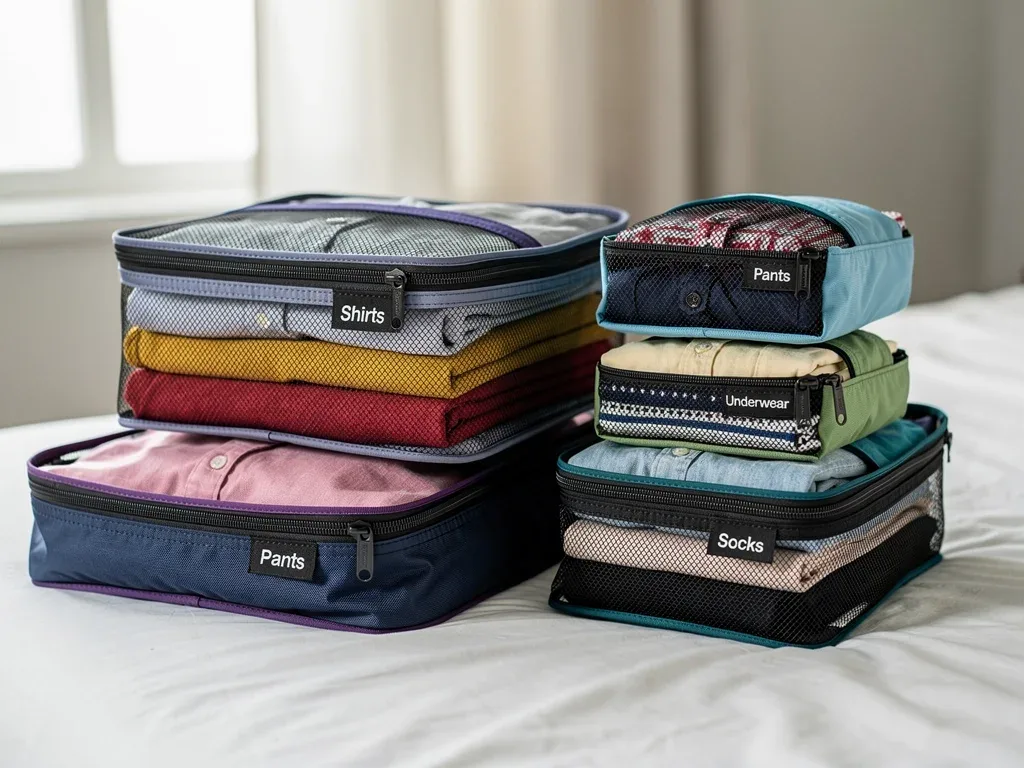
Compression cubes come in various sizes, allowing for organized packing of different clothing categories. You can dedicate one cube for tops, another for bottoms, and a smaller one for underwear and socks.
This organization not only saves space but also makes it incredibly easy to find specific items without rummaging through your entire bag. It's efficiency redefined for the modern traveler.
When using compression cubes, remember not to overstuff them initially. Fill them to a reasonable capacity, then zip the compression zipper. This prevents strain on the zippers and ensures optimal compression.
Hack 3: The Bundle Wrapping Method – Elegance in Efficiency
The bundle wrapping method is an advanced packing technique that not only saves space but also significantly reduces wrinkles, making it ideal for more delicate or formal wear. It's an elegant solution for the stringent carry-on restrictions 2026.
This method involves wrapping individual garments around a central core item, creating a single, dense, and virtually wrinkle-free bundle. It's a sophisticated approach to maximizing space while preserving garment quality.
While it requires a bit more practice than rolling, the results in terms of space-saving and wrinkle prevention are unparalleled, making it a valuable skill for any frequent flyer.
Executing the Bundle Wrap
Start with a core item, such as a soft toiletry bag or a small pouch of underwear. Lay out your bulkiest, least wrinkle-prone items first, like jackets or sweaters, flat on a surface.
Then, layer other items on top in decreasing order of size and wrinkle-proneness, alternating directions. Place your core item in the center, and begin wrapping the layers around it, one by one.
The goal is to create a seamless, tight package with no sharp folds. This method is particularly effective for shirts and dresses, ensuring they arrive at your destination looking fresh and ready to wear.
Hack 4: Wearing Your Bulkiest Items – The Smart Traveler's Secret
One of the most straightforward and effective hacks for navigating carry-on restrictions 2026 is to strategically wear your bulkiest items onto the plane. This immediately frees up significant space in your personal item.
Think heavy jackets, thick sweaters, and even hiking boots. By wearing these, you bypass the volume and weight limitations of your carry-on, effectively expanding your luggage capacity without incurring extra fees.
This hack is especially useful for colder climates or adventure trips where heavy outerwear is a necessity. It’s a simple yet powerful way to outsmart the system.
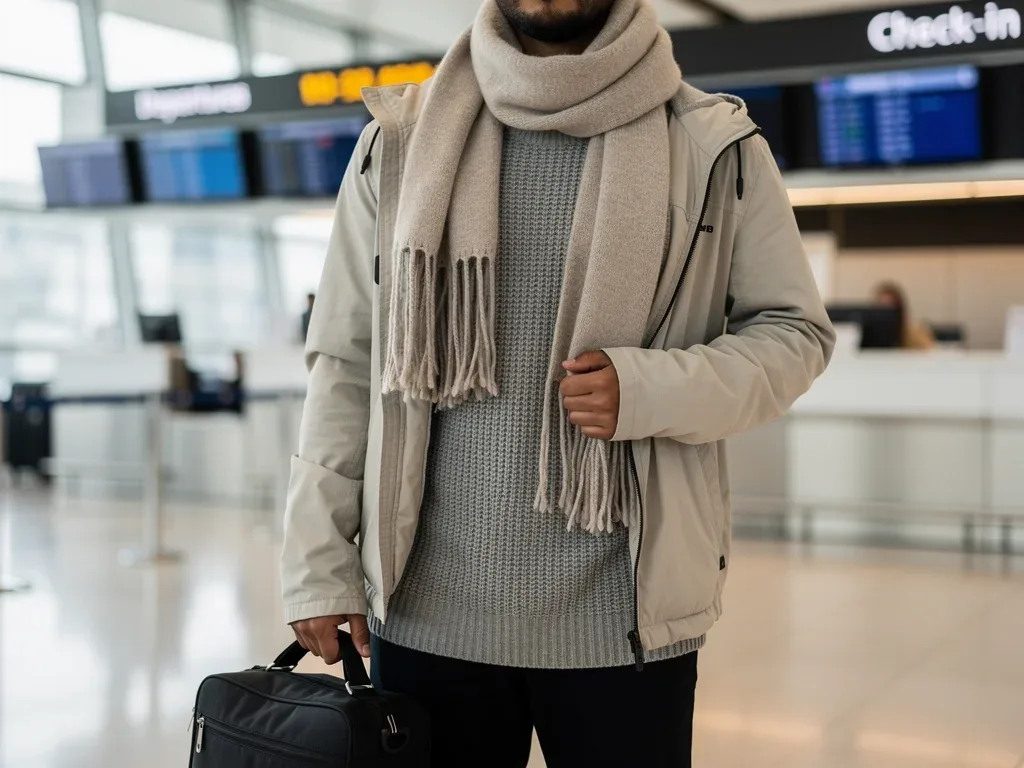
Consider wearing multiple layers, even if you plan to shed them once onboard. A light jacket over a sweater, for example, counts as one outfit worn, not two items packed.
Scarves, hats, and even small travel pillows can also be worn or carried separately without counting against your personal item allowance. Every little bit of space saved adds up over a 14-day trip.
Remember to dress comfortably for the flight, but prioritize items that would otherwise take up valuable bag space. You can always adjust your layers once you're settled in your seat.
Hack 5: The 'Personal Item' Overstuff – Maximizing the Outer Limits
While strict carry-on restrictions 2026 focus on dimensions, the 'personal item overstuff' hack leverages the flexibility of soft-sided bags to maximize every last inch. This isn't about exceeding limits, but optimizing within them.
A soft-sided backpack or duffel can often be filled more densely than a rigid suitcase of the same stated dimensions. This allows for a slight expansion when packed, provided it still fits the airline's sizing cage.
The key here is to understand your bag's true capacity when fully packed and compressed, ensuring it remains compliant while holding an impressive amount of gear for two weeks.
Choosing the Right Personal Item Bag
Opt for a personal item bag made from durable, flexible materials that can withstand being tightly packed. Look for bags with multiple compartments and external pockets for easy access to essentials.
Measure your bag carefully, both empty and when packed with your trial run of 14 days of clothes. Ensure it meets the specific dimension requirements of your chosen airline to avoid gate-check surprises.
A bag with external compression straps can also be incredibly useful for cinching down an overstuffed personal item, making it appear more compact and easier to manage during boarding.
Hack 6: Strategic Item Selection – The Minimalist Approach
The final, and perhaps most crucial, hack for mastering carry-on restrictions 2026 is strategic item selection. This involves adopting a minimalist mindset and carefully curating your wardrobe for versatility and necessity.
Every item packed should serve multiple purposes or be absolutely essential for your 14-day journey. This means leaving behind 'just in case' items and focusing on a capsule wardrobe approach.
Thoughtful selection at the outset dramatically reduces the overall volume and weight you need to manage, making all other packing hacks even more effective.
Curating Your 14-Day Wardrobe
Choose neutral colors and versatile pieces that can be mixed and matched to create numerous outfits. Three tops, two bottoms, and one outerwear piece can often create more than a week's worth of distinct looks.
Prioritize quick-drying fabrics if you plan on doing laundry during your trip. This allows you to pack fewer items and refresh your wardrobe on the go, further reducing your total packing volume.
Limit shoes to two pairs: the one you wear and one packed. Select versatile footwear that can transition from casual to slightly more formal settings. This disciplined approach is critical for success with upcoming carry-on restrictions 2026.
Packing Hack | Benefit |
|---|---|
Rolling Technique | Maximizes space by eliminating air pockets, reduces wrinkles for many garments. |
Compression Cubes | Actively shrinks clothing volume, provides organization, essential for 2026 rules. |
Bundle Wrapping | Best for wrinkle prevention and dense packing of diverse items. |
Wearing Bulky Items | Frees up significant bag space by utilizing personal attire for travel. |
Frequently Asked Questions About 2026 Carry-On Rules
What exactly are the new 2026 carry-on restrictions?▼
The 2026 carry-on restrictions are expected to involve stricter enforcement of size and weight limits for personal items, potentially reducing allowable dimensions. Airlines aim to decrease overhead bin congestion and improve boarding efficiency, impacting how travelers pack for future flights.
Can I really fit 14 days of clothes into a personal item?▼
Yes, fitting 14 days of clothes into a personal item is achievable with strategic planning and the hacks discussed. It requires careful selection of versatile clothing, efficient rolling or bundling techniques, and effective use of compression tools like packing cubes, especially under the new carry-on restrictions 2026.
Are compression packing cubes allowed under the new rules?▼
Yes, compression packing cubes are generally allowed. They help reduce the volume of your clothes, making it easier to fit everything within your personal item's dimensions. They are a key tool for adapting to the upcoming carry-on restrictions 2026 without exceeding limits.
What's the most important hack for avoiding extra fees?▼
The most important hack is precise measurement of your packed personal item against airline specifications. Combining this with wearing your bulkiest items and utilizing compression techniques will significantly reduce the risk of exceeding limits and incurring unexpected fees due to the carry-on restrictions 2026.
How can I stay updated on specific airline policy changes?▼
To stay updated, regularly check the official websites of the airlines you plan to fly. Subscribe to their newsletters and follow reputable travel news outlets. These sources will provide the most accurate and timely information regarding evolving carry-on restrictions 2026 and other travel policies.
Looking Ahead: Navigating the New Travel Landscape
The impending carry-on restrictions 2026 represent a significant shift in air travel, demanding a more strategic approach to packing and luggage management. The hacks outlined provide a robust framework for travelers to adapt effectively.
Mastering these layering and compression techniques ensures compliance with new regulations while maintaining the ability to travel for extended periods with just a personal item. This proactive preparation is crucial for avoiding fees and enhancing the overall travel experience.
As these changes take effect, continuous vigilance regarding specific airline policies will be essential. Travelers who embrace these smart packing strategies will be well-equipped to navigate the evolving travel landscape efficiently and economically.